
The Wedge: How TeamViewer Got Its First Customers
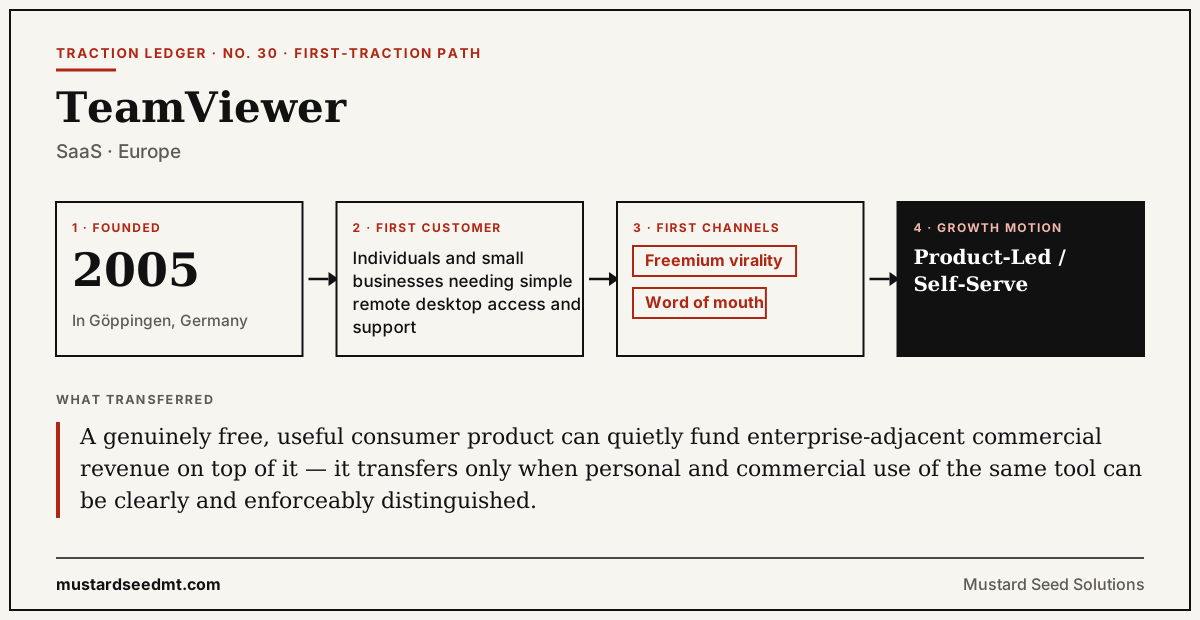
TeamViewer got its first users by giving away remote-desktop and screen-sharing software free for personal, non-commercial use, at a time when remote IT support tools were typically enterprise products with enterprise pricing.
The initial population was simply individuals needing to access their own computer remotely or help a family member with a technical problem — an unglamorous, everyday use case that nonetheless generated an enormous volume of installs over time.
Founded in Göppingen, Germany (2005).
TeamViewer's First Channel
The channel was the free version itself: because it cost nothing and solved an immediate, common problem, it spread through ordinary word of mouth — one person helping another with a remote support session was itself an advertisement for the tool.
This produced a genuinely enormous installed base of free personal users well before the company built any significant paid sales or marketing function around the commercial product.
The Motion: Product-Led / Self-Serve
The commercial model separated personal and commercial use explicitly: an individual could use the software free indefinitely, but a business using it for IT support or remote work needed a paid commercial license — a distinction TeamViewer enforced as its core monetization strategy.
The scale of the free user base meant that even a small conversion rate into commercial licenses, as freelancers and small businesses adopted the same familiar tool for work purposes, produced a substantial paying customer base without dedicated outbound sales.
This freemium-at-massive-scale structure predated the term "freemium" becoming a standard SaaS growth vocabulary, and TeamViewer is frequently cited as one of the earlier large-scale examples of the pattern in enterprise-adjacent software.
The Turn — the motion held
The motion held. TeamViewer's structure — a very large free consumer base subsidizing acquisition for a smaller paid commercial base — remained consistent through the company's growth and its 2019 public listing in Frankfurt.
Era: 2005-2014
Where It Ended Up: Public (Frankfurt: TMV) since 2019
What Transferred
"A genuinely free, useful consumer product can quietly fund enterprise-adjacent commercial revenue on top of it — it transfers only when personal and commercial use of the same tool can be clearly and enforceably distinguished."
Sources
Related Entries
Twilio
SMS and voice as an API — pay per call, no sales conversation required.
Hacker NewsGitHub
Git hosting that made open-source collaboration social, starting with the Ruby community.
Open-source repoDatadog
Unified monitoring for DevOps teams juggling too many separate dashboards.
Webinars