
The Wedge: How Webflow Got Its First Customers
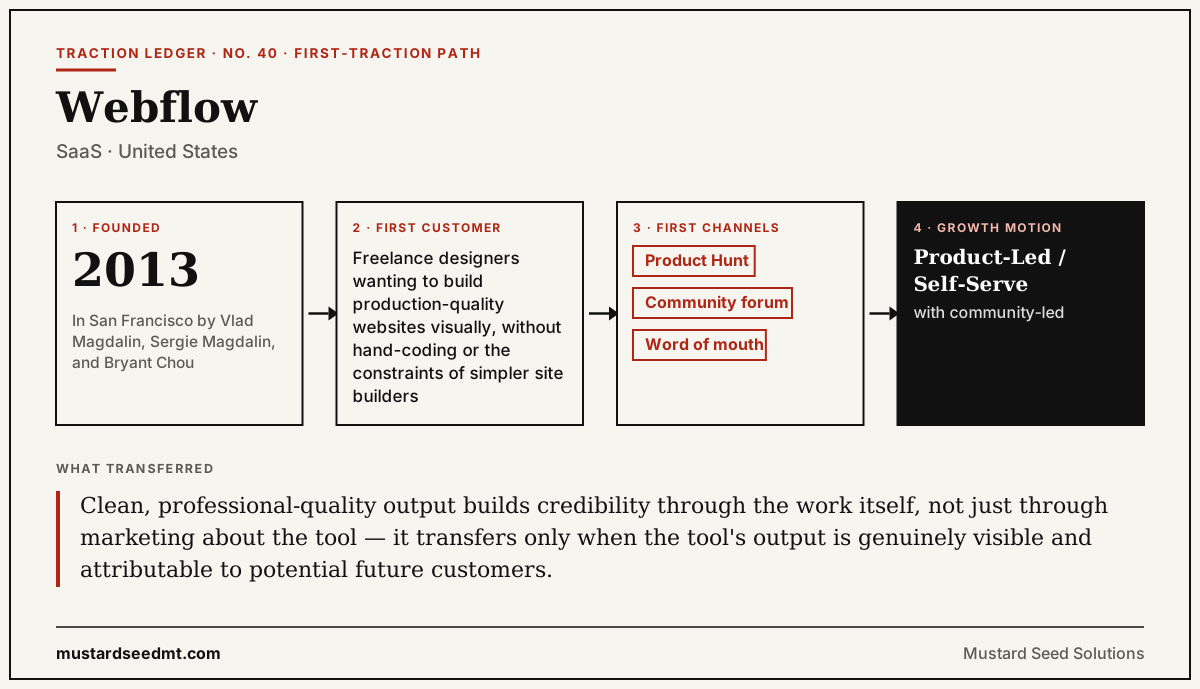
Webflow got its first users by giving freelance designers who understood visual design but not code a way to build genuinely production-quality websites — with real, clean underlying markup — without writing it by hand, positioned between hand-coding and the more limited, template-locked simplicity of tools like Wix or Squarespace.
The first adopters were freelancers and small agencies frustrated by having to either hire a developer for every client site or accept the visual limitations of simpler drag-and-drop builders that produced messier code and less design control.
Founded in San Francisco by Vlad Magdalin, Sergie Magdalin, and Bryant Chou (2013).
Webflow's First Channel
The channel ran through early product-discovery communities and design-focused forums, where the specific promise — visual design control with clean code output — resonated directly with freelance designers already dissatisfied with existing options.
Because every site built in Webflow was, by nature, published publicly on the web, client sites built by early adopters functioned as an implicit demonstration of the tool's output quality to anyone who noticed how well-built the site was.
The Motion: Product-Led / Self-Serve
The freemium model let a designer build and preview a site for free, converting to a paid plan once they needed to host it on a custom domain or manage multiple client sites — pricing tied closely to real, incremental usage.
Word of mouth inside the freelance-designer and small-agency community compounded steadily, since design work is itself a networked, referral-heavy profession where practitioners regularly discuss and recommend tools to peers.
As adoption grew, Webflow broadened its positioning from a tool for individual freelancers to a platform aimed at marketing teams and agencies managing many sites, aligning with the wider "no-code" movement gaining momentum industry-wide.
The Turn
The turn was positioning: from a specific tool solving freelance designers' code-versus-control tradeoff, Webflow broadened into a general no-code platform pitch aimed at a much larger buyer — marketing teams and agencies — riding a broader industry movement rather than staying confined to its original niche.
Era: 2005-2014
Where It Ended Up: Private; still independent
What Transferred
"Clean, professional-quality output builds credibility through the work itself, not just through marketing about the tool — it transfers only when the tool's output is genuinely visible and attributable to potential future customers."
Sources
Related Entries
Twilio
SMS and voice as an API — pay per call, no sales conversation required.
Hacker NewsGitHub
Git hosting that made open-source collaboration social, starting with the Ruby community.
Open-source repoDatadog
Unified monitoring for DevOps teams juggling too many separate dashboards.
Webinars