
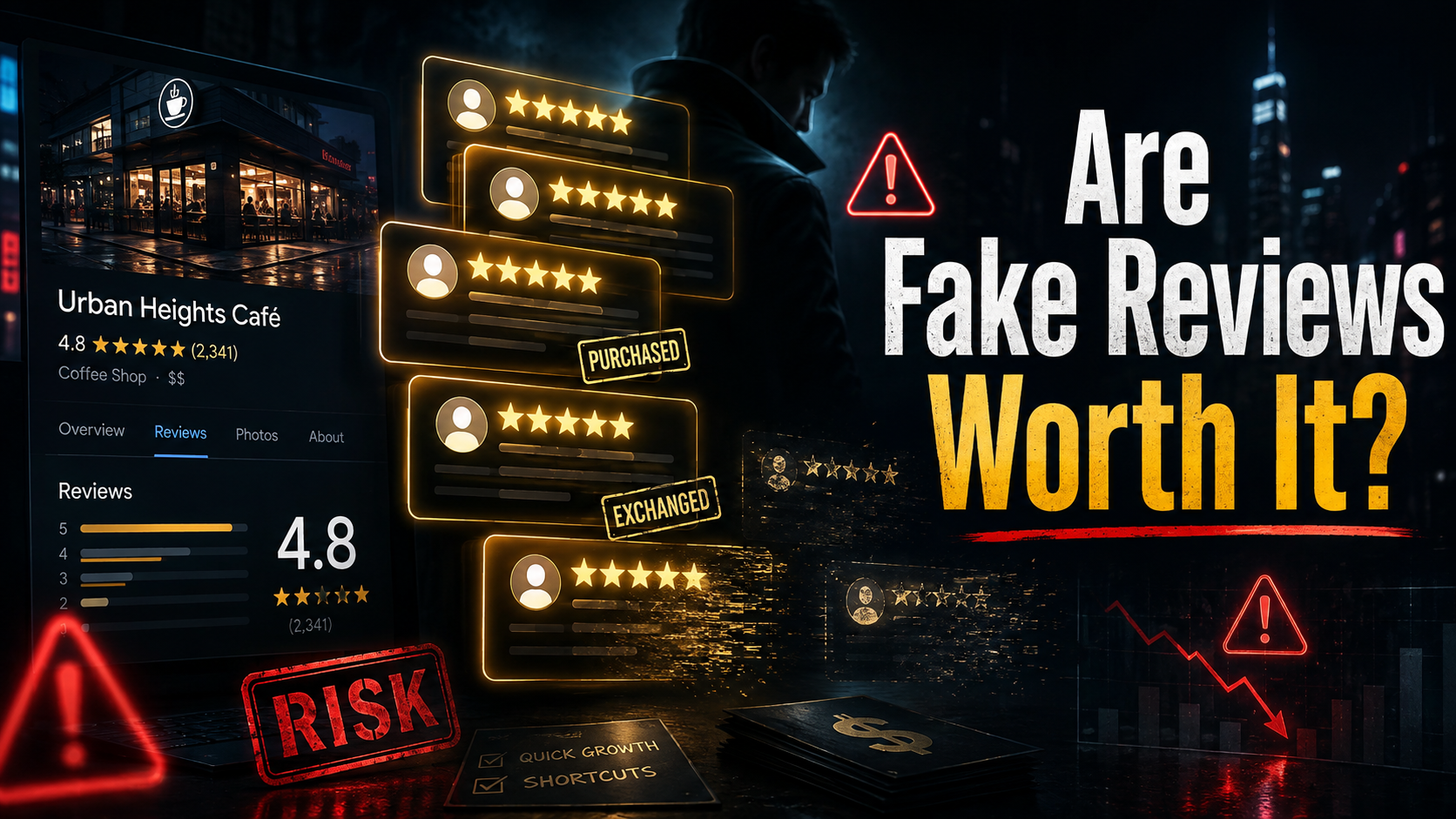
Yes, buying or swapping Google reviews can create serious local visibility and reputation risks. Google explicitly treats fake and incentivized reviews as prohibited engagement, and violations can lead to review removal, restrictions on receiving new reviews, unpublished ratings, or warnings on the Business Profile.
It is more precise to describe this as a Business Profile and local visibility risk than to promise a specific organic ranking penalty. The practical outcome is still bad: a tactic intended to manufacture trust can weaken the public evidence customers and search systems use to evaluate the business.
The SEO reaction video behind this series discusses review swaps and paid reviews as an easy local SEO shortcut, then immediately points out the detection and profile risks. That is one of the clearest examples of a tactic that should remain an example, not a recommendation.
What Does Google Say About Fake or Incentivized Reviews?
Google says fake engagement and incentivized reviews violate its policies. Businesses found violating the policy may face restrictions in addition to having the reviews removed.
Google lists possible restrictions including:
- Temporarily blocking new reviews or ratings
- Temporarily unpublishing existing reviews or ratings
- Displaying a warning that fake reviews were removed
See Google's Business Profile restriction guidance.
That makes the risk much broader than losing a few questionable reviews. A business can damage one of its most visible local reputation assets.
For a local company, that profile may influence how customers evaluate the business before they ever visit the website.
Is Swapping Reviews With Other Businesses Safe?
No. A review swap creates a conflict because the review exists as part of an exchange rather than an independent customer experience.
The video gives the example of joining local business groups and asking other owners to review one another. It also explains why a network of accounts repeatedly reviewing each other's businesses may look artificial.
Even without discussing detection methods, the strategic problem is obvious: the review is no longer trustworthy evidence.
A review should help a potential customer answer questions such as:
- Did this person genuinely use the service?
- What problem did they have?
- What happened?
- What did the company do well?
- Were there limitations?
- Would the customer recommend the company?
A swapped review cannot reliably answer those questions if the reviewer never had a genuine experience.
Does Paying for Google Reviews Help Local Rankings?
Any short term benefit is outweighed by policy and reputation risk. A purchased review does not create a better product, a better service, stronger customer experience, or more durable authority.
Reviews can matter to local marketing because they influence trust and can contribute useful public information about a business. But that does not make every additional five star review valuable.
A suspicious pattern of generic praise may be less persuasive than a smaller number of detailed reviews from real customers.
From an AI visibility perspective, authentic reviews can also provide language that describes real use cases, outcomes, strengths, and complaints. Fabricated reviews pollute that evidence.
The sustainable goal is therefore better customer evidence, not a larger review number at any cost.
What Is the Difference Between Asking for Reviews and Incentivizing Reviews?
Asking a real customer for honest feedback is a normal reputation practice. Paying someone for a review, swapping reviews, or offering a reward tied to posting a review introduces an incentive that can violate platform rules and undermine trust.
A clean review request should be simple.
Ask customers who genuinely used the product or service to describe their experience in their own words. Do not tell them which rating to leave or give them a script filled with target keywords.
Avoid review gating as well. If you only ask happy customers for public reviews while routing unhappy customers somewhere private, the resulting profile becomes less representative.
The objective should be a steady stream of genuine feedback.
For smaller companies building their first marketing system, Solo Business Marketing can help connect review generation with a clearer website, local visibility, and a practical enquiry process.
Can Fake Reviews Hurt AI Search Visibility Too?
Potentially, but the mechanism is not a simple published "AI ranking penalty." The bigger issue is that AI search increasingly uses public web evidence when answering questions about companies, products, and local businesses.
If the visible review environment is manipulated, removed, restricted, or contradicted by other sources, the brand has weaker evidence.
AI assistants may also surface negative commentary, policy warnings, customer complaints, or competing businesses when users ask questions about trustworthiness.
A strong AI visibility program therefore treats reviews as one part of a larger authority system alongside:
- Clear first party product information
- Case studies
- Independent media mentions
- Expert references
- Partner pages
- Accurate business profiles
- Consistent entity information
- Authentic customer reviews
Mustard Seed's AI Visibility Audit evaluates these signals together instead of treating review count as a standalone GEO tactic.
What Should Businesses Do Instead of Buying Reviews?
Build a repeatable review request process around real customer moments.
Good triggers include:
- Project completion
- Successful onboarding
- Product adoption milestones
- Support resolution
- Renewal
- Positive customer feedback
- A completed service visit
Make the request easy, but do not write the customer's opinion for them.
Then use the feedback operationally. Reviews can reveal which benefits customers value, which objections repeat, where messaging is unclear, and what the company needs to improve.
That turns reputation management into a business learning system instead of a vanity metric.