
The Wedge: How Intercom Got Its First Customers
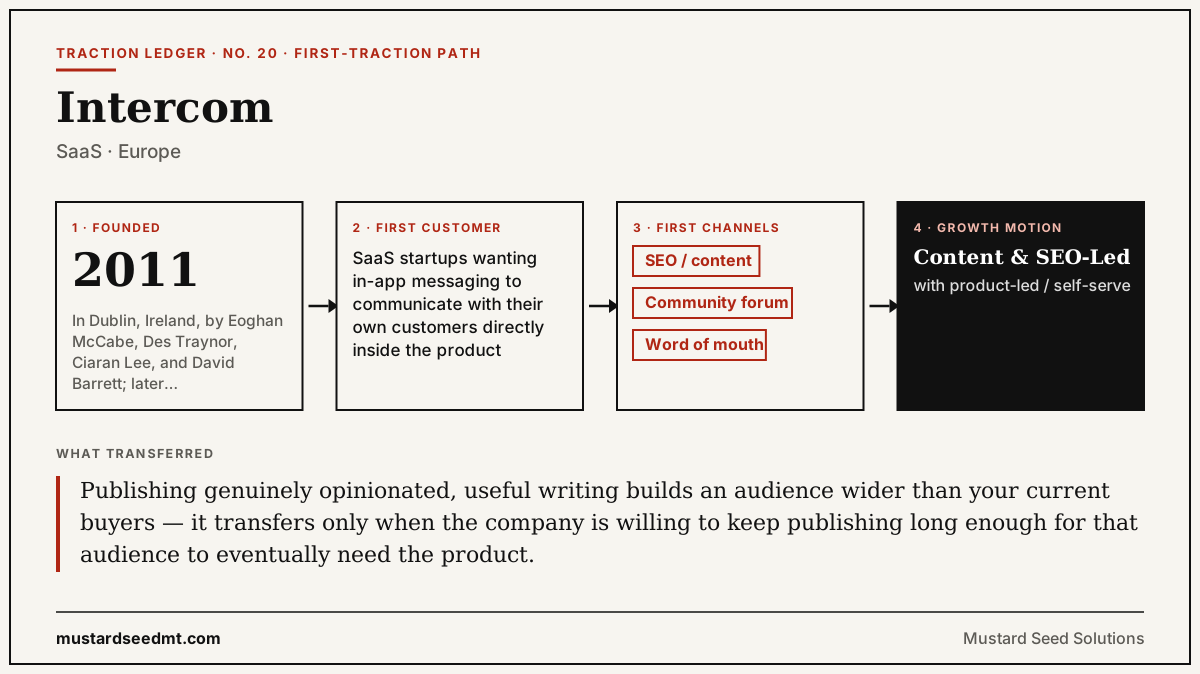
Intercom got its first customers by giving SaaS startups a direct, in-app way to talk to their own customers — a messaging widget inside the product itself, rather than customers having to leave the app to send an email or open a separate support ticket.
The earliest adopters were other startups, largely reached through the founders' own network in Dublin's and San Francisco's startup communities, who wanted a more personal, immediate way to engage users than existing email-based tools allowed.
Founded in Dublin, Ireland, by Eoghan McCabe, Des Traynor, Ciaran Lee, and David Barrett; later headquartered in San Francisco (2011).
Intercom's First Channel
Intercom built an unusually influential company blog early on, publishing opinionated writing about product management, customer engagement, and startup strategy that reached far beyond people actively shopping for a messaging tool.
That content built audience and trust inside the startup and product-management community broadly, and a meaningful share of that broader readership eventually became product signups once they had a concrete need for in-app messaging.
The Motion: Content & SEO-Led
The self-serve signup let a startup add the Intercom widget to their product within a day, seeing immediate value (real conversations with real users) with minimal setup — the classic product-led pattern of proving value before payment.
Per-seat monthly pricing matched how small startup teams actually grew, letting the bill scale naturally alongside a company's own headcount and usage rather than requiring a renegotiated contract at each stage.
The company's content operation and product function reinforced each other: the same team's public thinking about how startups should engage customers doubled as marketing for a tool built to do exactly that.
The Turn
The turn was scope: from a single in-app messaging widget, Intercom broadened into a fuller customer engagement and support platform — combining chat, help-desk-style ticketing, and automated messaging — repositioning from a point tool to a more complete customer communication platform.
Era: 2005-2014
Where It Ended Up: Private; still independent
What Transferred
"Publishing genuinely opinionated, useful writing builds an audience wider than your current buyers — it transfers only when the company is willing to keep publishing long enough for that audience to eventually need the product."
Sources
Related Entries
Slack
An internal messaging tool built for one gaming studio's own team, released after the game itself failed.
Personal networkZoom
Reliable video calling built by a former WebEx engineer who thought existing video conferencing was too frustrating.
Freemium viralityHubSpot
The company that coined "inbound marketing," then used its own content to prove the concept worked.
SEO / content