
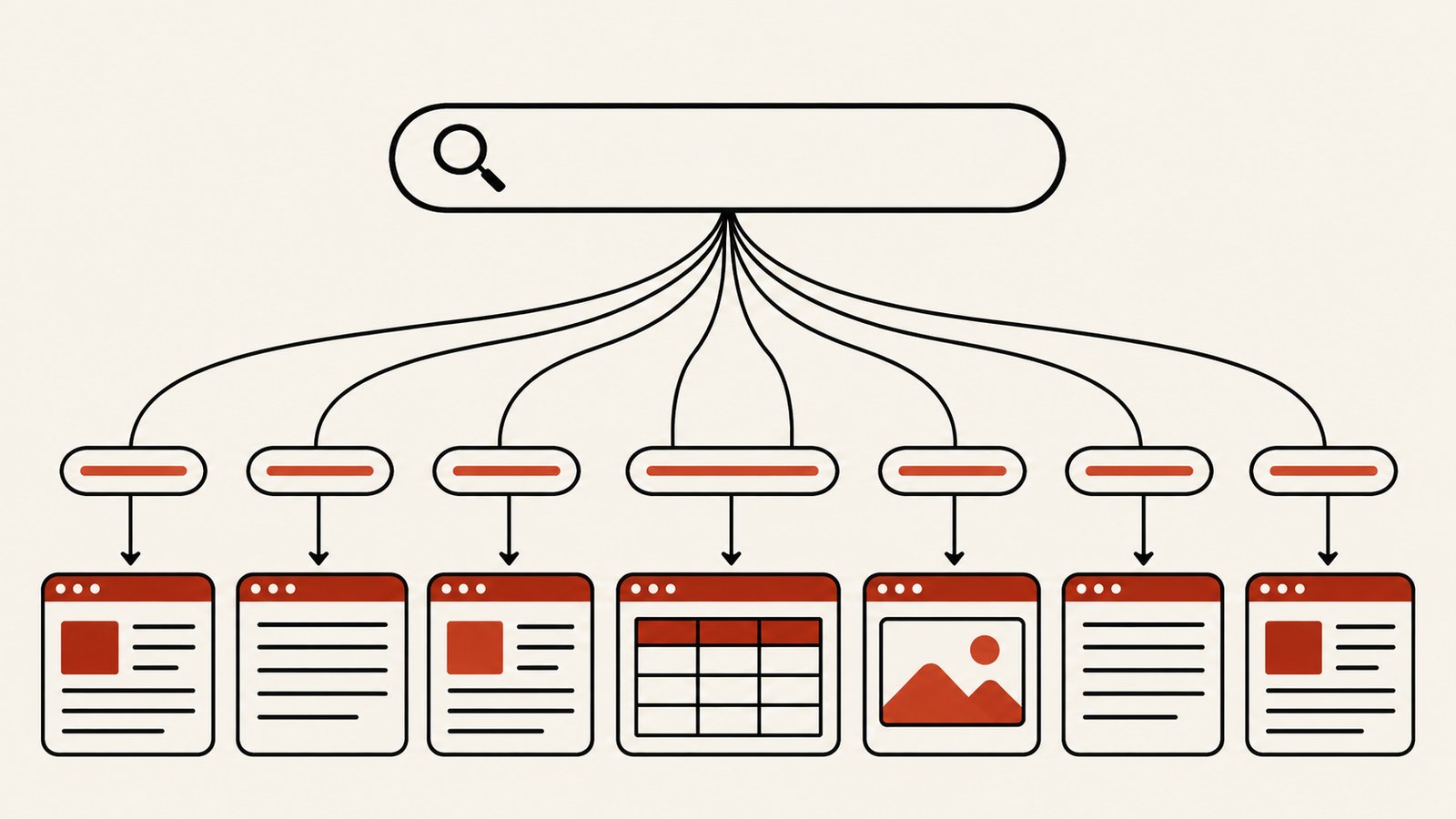
Gemini 4 Hydrogen became the default model in Google's AI Mode for all users worldwide on 12 November 2026. Google says it handles multi-part questions better and runs a wider query fan-out, so answers link to a broader range of sites and show more comparison tables. For B2B tech companies, pages that answer one specific buyer question clearly now get more chances to be cited.
What Google changed on 12 November
Robby Stein, VP of Product for Google Search, called Hydrogen "the biggest model upgrade to Search yet" in a Google Search post. The post says the model is available globally in Search for all users and lists four changes:
- it understands questions with several parts, typos or very specific requests, and follows instructions more closely
- its query fan-out runs searches across all the subtopics of a question at the same time, "connecting you to a broader range of helpful links than before"
- answers carry more images, structured responses, comparison tables and custom tools
- answers are more nuanced in every language AI Mode supports
Search Engine Journal reported that Hydrogen is now the default model in AI Mode, and that Stein wrote on X that it is also "being used for your hardest questions in AI Overviews." Google has not said which AI Overview questions count as the hardest.
Hydrogen is the third Gemini 4 model to reach AI Mode since 13 October. According to Search Engine Journal, Gemini 4 Argon became an option for Google AI Pro and Ultra subscribers on 13 October, and Gemini 4 Carbon reached Ultra subscribers on 10 November, which we covered in our Gemini 4 Carbon post. Google's model announcement describes Hydrogen as the fast, efficient model, with Carbon and Argon meant for longer reasoning. The practical difference is reach: Carbon and Argon are paid options, while Hydrogen answers everyone.
Why query fan-out matters for technical products
A buyer evaluating infrastructure or developer software rarely asks one simple question. They ask whether a product runs on their cloud, supports their identity provider, meets a retention requirement and fits a budget, often in one prompt. Fan-out splits that prompt into sub-questions and searches each one.
Our view: each sub-question is a separate chance to be cited. A page that states plainly which identity providers you support, or what your system limits are, can be picked for that part of the answer even if your brand is small. A general product overview that mentions everything in passing gives the model little to quote. Google's post and Stein's thread both say users will see more links, but neither gives a number, so treat this as a direction and check it against your own data.
Comparison tables reward plain facts
Google says Hydrogen answers will include more comparison tables. When a buyer asks AI Mode to compare products, the model has to fill table cells with facts it can find: supported protocols, deployment options, limits, prerequisites, pricing logic.
Our view: if those facts sit on your site in clear sentences or HTML tables, the model can use them. If they are hidden behind a demo form or phrased as slogans, it will fill the cell from someone else's page, possibly a competitor's comparison page. Audit the five or six attributes buyers compare you on and make sure each one is stated on a crawlable page in one or two sentences.
Log two dates in November
The model change landed two days into the November 2026 core update, which started on 10 November and was still rolling out on 12 November according to Search Engine Journal. Its advice is to log both dates, so you can compare tracking data before and after each change instead of reading the month as one event.
Our view: annotate 10 November and 12 November in your analytics and in whatever tool tracks AI Mode or AI Overview citations. Watch referral traffic from Google separately for pages that answer narrow questions (integration, requirements, comparison pages) and for broad pages. If fan-out is sending more links to specific answers, those pages should move first.
What to do this month
1. Annotate 10 and 12 November in analytics and citation tracking. 2. List the sub-questions your buyers ask before a demo and check that each has a clear answer on a crawlable page. 3. Put comparable facts (limits, integrations, deployment, pricing model) in plain tables. 4. Compare Google referrals to narrow pages and broad pages over the next four weeks before changing anything larger.