
AI search tools are becoming an important part of how people research products, services, and companies.
A potential customer may ask an AI system to recommend software, compare agencies, identify local providers, or explain which solution fits a particular situation.
The response may contain several brand names.
For businesses, this creates a new visibility goal.
It is no longer enough to consider only where a webpage ranks. Companies must also consider whether AI systems can identify the brand, understand its offer, and include it in relevant generated answers.
There is no method that guarantees a brand mention in every AI response.
However, businesses can improve their chances by creating clear information, building credible recognition, and becoming part of the sources AI systems use to understand a market.
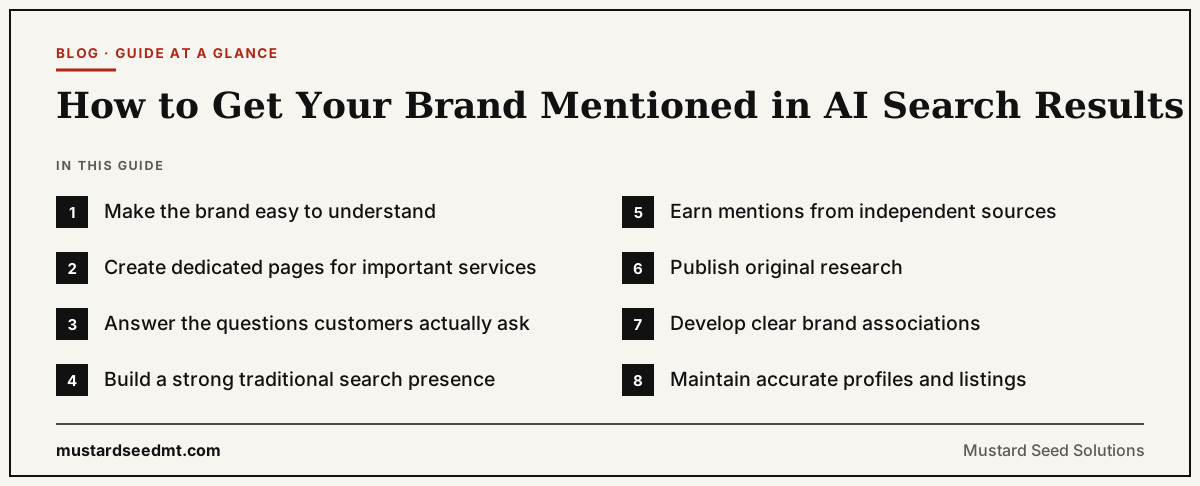
Make the brand easy to understand
A business should be able to explain its offer clearly.
AI systems may struggle to interpret companies that rely heavily on vague slogans.
Statements such as “We create innovative solutions for tomorrow” provide little useful information.
A clearer description explains what the company provides, who it serves, where it operates, and which problems it solves.
For example:
“We provide SEO, paid advertising, analytics, and content strategy for B2B technology companies in Europe.”
This description contains identifiable services, customers, and geography.
The same clarity should appear across the homepage, service pages, company profiles, directories, and external descriptions.
Create dedicated pages for important services
A single general page may not provide enough detail for every relevant question.
Businesses should consider creating dedicated pages for major services, products, industries, and customer groups.
A marketing company might have separate pages for SEO consulting, paid advertising, analytics implementation, and content strategy.
A software company might create pages for product features, integrations, security, pricing, and industry use cases.
These pages help search and AI systems connect the brand with specific subjects.
Each page should provide factual and useful information rather than repeating general promotional claims.
Answer the questions customers actually ask
AI search often begins with detailed questions.
Users may ask which provider suits their budget, industry, location, team size, technical requirements, or business stage.
Businesses should create content that addresses these conditions.
Useful topics include comparisons, buying guides, implementation requirements, pricing explanations, service processes, product limitations, and frequently asked questions.
A company should not avoid difficult questions.
Information about limitations, suitability, and tradeoffs can make content more credible.
For example, a software provider could explain which businesses are not a good fit for the product.
This type of honesty gives AI systems clearer material to use when answering specific prompts.
Build a strong traditional search presence
AI visibility and traditional SEO are closely connected.
Generative systems that retrieve information from the web need discoverable sources.
Pages should be accessible, indexable, and clearly connected through internal links.
The website should have a logical structure.
Important content should not be buried or available only inside images, videos, or interactive tools without supporting text.
Keyword research can also reveal the language customers use.
This helps businesses create pages that match real questions rather than internal company terminology.
Strong SEO does not guarantee AI mentions, but weak discoverability reduces the opportunity.
Earn mentions from independent sources
A company’s own website is a self published source.
Independent references can provide stronger confirmation.
AI systems may encounter the brand through industry publications, directories, customer reviews, podcasts, event pages, research reports, comparison websites, and partner profiles.
These sources help establish that the company participates in a real market.
Businesses can earn this recognition through public relations, partnerships, expert commentary, professional associations, interviews, research, and customer success stories.
The objective should not be to place the company name everywhere.
The objective is to appear in relevant and credible contexts.
Publish original research
Original research can make a company more likely to be cited or mentioned.
AI systems and human publishers both need useful facts.
A business can analyse anonymised customer data, conduct a survey, publish benchmarks, or interview industry professionals.
The research should explain its method, date, sample size, and limitations.
Weak research created only for promotion may damage trust.
Strong research can attract links and citations from publications, experts, and other companies.
These references strengthen the connection between the brand and the subject.
Develop clear brand associations
A company should be consistently associated with the subjects it wants to own.
If a consultancy wants to be recognised for cybersecurity marketing, its website and external presence should support that position.
Publishing unrelated articles across many popular topics may weaken the signal.
Focus is useful.
The company can build a connected body of content, case studies, research, events, and partnerships around the target market.
Over time, repeated associations make the brand easier to understand.
This is sometimes described as topical authority or brand authority.
Maintain accurate profiles and listings
Outdated information can create confusion.
A business may change its name, location, services, pricing, or target customers while old profiles remain online.
AI systems may retrieve these older descriptions.
Review important directories, social profiles, product platforms, partner pages, and company databases.
Correct inaccurate information where possible.
Use a consistent company name and website address.
Important details such as location, contact information, product category, and service description should agree across major sources.
Consistency does not require identical marketing language everywhere.
It requires agreement on the facts.
Encourage genuine customer reviews
Reviews can help AI systems understand customer experiences, product strengths, and common concerns.
Businesses should encourage genuine feedback on platforms relevant to their market.
Software companies may receive reviews on specialist product platforms. Local businesses may depend more heavily on location based review services. Professional providers may receive testimonials, case studies, or directory reviews.
Do not purchase fake reviews or pressure customers to make claims they cannot support.
Artificial feedback can create legal, reputational, and platform risks.
A smaller number of detailed and authentic reviews is more valuable than a large volume of suspicious praise.
Become visible in professional communities
Customers often discuss products and providers in communities before making decisions.
These discussions may appear on forums, social platforms, industry groups, and question based websites.
Businesses should participate carefully.
Community engagement should focus on helping people, not inserting brand mentions into every conversation.
Founders and specialists can answer questions, explain processes, and share relevant experience.
Transparent participation can create awareness and trust.
Fake accounts, hidden promotion, and automated posting can damage the brand.
Create comparison friendly information
AI users frequently ask for comparisons.
Businesses should make the differences between options clear.
A company can explain its pricing model, target customer, geographic coverage, implementation process, support level, integrations, and service scope.
This does not require attacking competitors.
It means giving customers the facts needed to evaluate fit.
Comparison content can include “best for” scenarios, limitations, alternatives, and decision criteria.
When this information is missing, AI systems may depend on external sources that are less accurate.
Strengthen author and company credibility
Content should show who created it.
Author biographies, professional experience, company information, research methods, and relevant qualifications help users evaluate credibility.
Case studies should explain the actual process and result.
Expertise should be demonstrated through evidence rather than unsupported claims.
A company that repeatedly publishes clear and accurate information under identifiable authors creates a stronger public record.
Monitor how AI tools describe the brand
Businesses should test important prompts across relevant AI platforms — the systematic version of this exercise is an AI visibility audit.
Ask questions that potential customers might use.
Record whether the brand appears, how it is described, which competitors are included, and whether citations are provided.
These tests are directional rather than definitive.
Generated answers can change, and one prompt does not represent every user experience.
The purpose is to identify patterns and factual problems.
When an answer contains incorrect information, investigate the likely sources.
Correcting the website alone may not be enough if the error appears across external platforms.
Measure business outcomes
AI visibility should connect to commercial results.
Track referral traffic from AI platforms where possible.
Monitor branded searches, direct traffic, assisted conversions, and sales enquiries.
Ask new customers how they discovered the company.
A brand mention may influence someone who later searches directly rather than clicking a citation.
This makes attribution more difficult, but not impossible.
Use several indicators rather than one AI visibility score.
Build the evidence AI systems need
A brand is more likely to appear in AI search results when credible information about it exists across several relevant sources.
The company should be easy to understand, associated with a clear market, and supported by real customer and industry recognition.
There is no guaranteed prompt optimization formula.
The strongest approach combines SEO, content, public relations, customer experience, partnerships, reviews, and accurate company information.
AI visibility grows when the brand becomes a credible part of the public conversation about its market.